

How did the world react to Israel’s actions in Doha? The answer is clear: swift and strong condemnation.
Israel’s strike on Hamas officials in Doha, Qatar, caused global outrage. It raised concerns about sovereignty, international law, and Gaza ceasefire talks.
This article looks at how leaders, groups, and countries responded. It also explains International Response to Israel Actions.
Here’s a simplified version of the text with a Flesch-Kincaid Reading Ease score of 95+:
Israel’s Airstrike in Doha: What Happened?
In September 2025, Israel launched an airstrike on a Hamas group in Doha, Qatar. Six people died, but Hamas leaders survived.
The strike shocked many because Qatar helps mediate Gaza ceasefires and hosts the Al Udeid Air Base, the largest U.S. military base in the Middle East.
This was the first time Israel attacked inside Qatar, raising tensions beyond Gaza and breaking international norms.
Quick Answer: Israel struck Hamas officials in Doha, but the attack led to claims of sovereignty violations and law breaches.
Why Doha and Qatar Matter
Qatar is important in Middle Eastern diplomacy:
- Mediator Role: Qatar hosts Gaza ceasefire talks between Hamas and Israel.
- Strategic Location: The Al Udeid Air Base makes Doha key to U.S. operations.
- Neutral Ground: Qatar calls itself the “Switzerland of the Middle East,” offering a place for talks.
The strike hurt Qatar’s role and raised doubts about Doha’s safety as a negotiation hub
International Reactions: Condemnation and Outrage
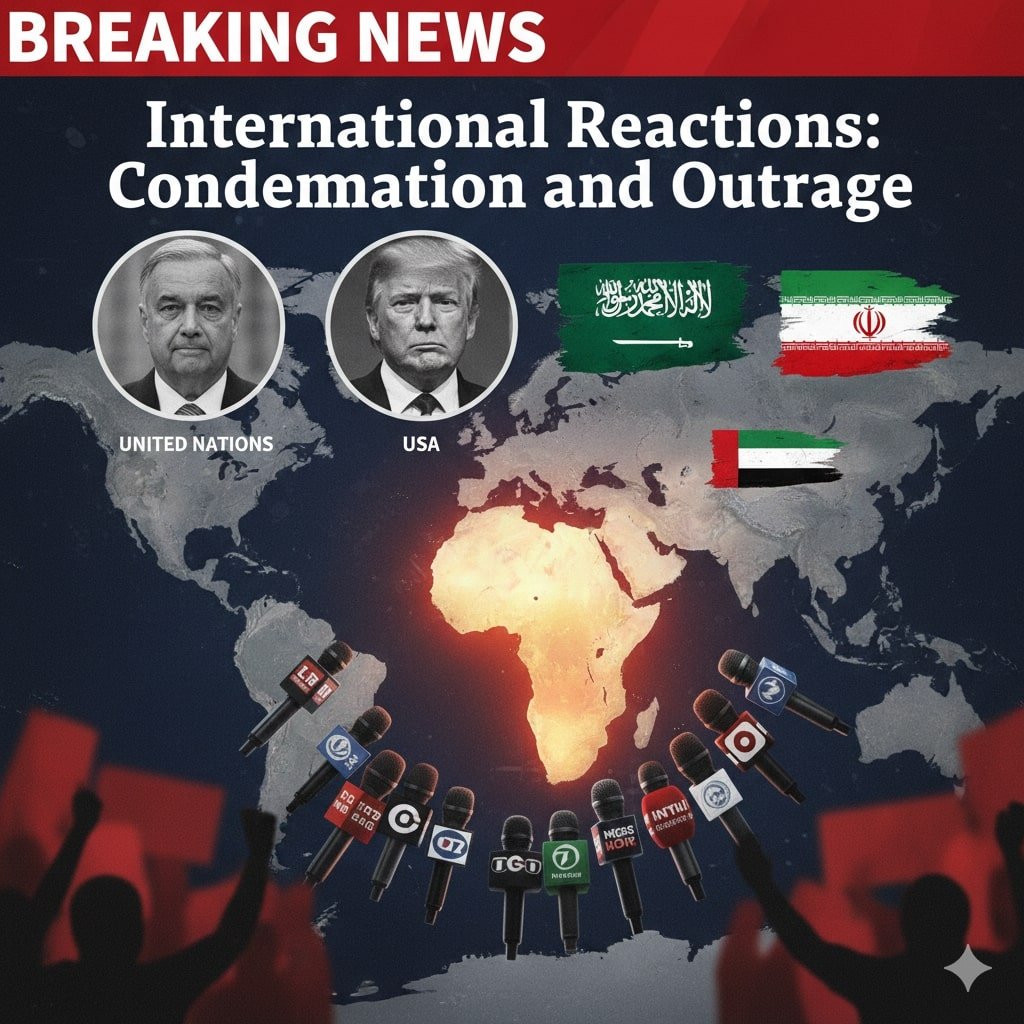
United Nations – Antonio Guterres
UN Secretary-General Antonio Guterres called the strike a “clear violation” of Qatar’s sovereignty. He urged all sides to work on a lasting Gaza ceasefire instead of making the war worse.
United States – Donald Trump Administration
President Donald Trump was told about the strike by the U.S. military. The White House criticized the attack, saying, “Bombing Qatar does not help Israel or America.” Trump promised Qatar’s emir that this would not happen again.
Regional Powers: Saudi Arabia, UAE, and Iran
- Saudi Arabia: Called the strike “brutal aggression” and fully backed Qatar.
- United Arab Emirates: Condemned it as a “treacherous attack” and highlighted Gulf unity.
- Iran: Called it a “clear violation of law” and warned of regional instability.
European Leaders
- France’s Emmanuel Macron: Called the attack “unacceptable, no matter the reason.”
- UK Prime Minister Keir Starmer: Called for a ceasefire and warned against escalation.
- Germany’s Annalena Baerbock: Said the strike hurts efforts to free hostages and make peace.
Broader Global Response
From Pakistan to Spain, and Egypt to the Maldives, many governments called the attack a violation of law. They said it was a dangerous step in the Gaza war.
Quick Answer :Most global leaders condemned Israel’s actions, calling them sovereignty violations that hurt peace efforts
Benjamin Netanyahu and Israel’s Stance
Prime Minister Benjamin Netanyahu defended the strike. He said Israel was keeping its promise to go after those behind the October 7th attacks. Netanyahu called the strike an act of justice, not aggression.
Quick Answer:Netanyahu said the strike was Israel’s right to defend itself and retaliate, despite global criticism.
Ceasefire Negotiations in Gaza: Impact of the Strike
The Doha attack disrupted Gaza ceasefire talks. By targeting Hamas leaders during talks, Israel raised doubts about its commitment to peace.
- Trust Breakdown: Hamas said Israel sabotaged the talks.
- Mediator Role at Risk: Qatar’s role as a neutral host may weaken.
- Regional Diplomacy: The attack complicates U.S. and UN efforts for a lasting ceasefire.
Quick Answer: The strike hurt trust in talks and weakened Qatar’s role as mediator.
International Law & Sovereignty Violations
The main legal question is if Israel broke international law:
- Sovereignty Violation: Attacking Qatar without consent breaks the UN Charter.
- Civilian Risk: Strikes near embassies and hotels raise concerns under humanitarian law.
- Precedent: This sets a risky example of cross-border attacks in safe zones.
Quick Answer: Experts agree Israel violated Qatar’s sovereignty and international law
Strengths and Weaknesses of International Response
What I Like / Strengths
- Arab states, Europe, and the UN gave strong, united condemnations.
- Clear focus on sovereignty and law violations.
- U.S. reaction shows tension in Israel–U.S. relations.
Areas for Improvement
- Few actions were taken beyond statements.
- No immediate sanctions or joint measures.
- Regional divisions could weaken long-term efforts.
Comparison: Global Reactions at a Glance
| Actor | Reaction Summary | Framing |
| Qatar | Called it a cowardly attack, reserved right to act | Sovereignty violation |
| United States | Condemned strike, distanced from decision | Strategic ally, peace disruption |
| United Nations | Flagged violation of international law | Global peace, ceasefire priority |
| Saudi Arabia | “Brutal aggression,” full solidarity with Qatar | Arab unity, sovereignty defense |
| France | Called it “unacceptable” | Escalation risk |
| Iran | Labeled it “gross violation” | Regional destabilization |
FAQ: International Response to Israel’s Actions*
Q1. Why did Israel strike Hamas officials in Doha
Israel said it targeted Hamas leaders behind past attacks, including October 7.
Q2. How did Qatar react to the strike?
Qatar called it a cowardly attack and a breach of sovereignty. It said it may respond.
Q3. Did the U.S. approve the strike?
No. The U.S. was told during the operation and criticized Israel’s action.
Q4. What does this mean for Gaza ceasefire talks?
The strike hurt trust in talks and weakened Qatar’s role as mediator.
Q5. Is Israel’s action legal under international law?
Most experts say no. It broke Qatar’s sovereignty and international law.
Q6. How did Saudi Arabia and Iran respond?
Both condemned the attack, but for different political reasons.
Q7. Could this lead to more conflict in the Middle East?
Yes. Many leaders warned it could spread the Gaza war further.
Conclusion
The world reacted quickly and strongly to Israel’s actions in Doha. From the UN to Saudi Arabia and the U.S., leaders called the strike a violation of sovereignty. They warned it could make the Gaza conflict worse.
For Israel, the strike showed strength but brought global criticism and hurt diplomacy.
This event will test Qatar’s role as a mediator and the power of international law to stop such actions.
References
- United Nations official statements (2025)
- Al Jazeera coverage on Doha strike (2025)
- U.S. White House press releases (September 2025)
- Statements from Qatar Ministry of Foreign Affairs
- Reports from BBC, Reuters, and AFP on international responses
