

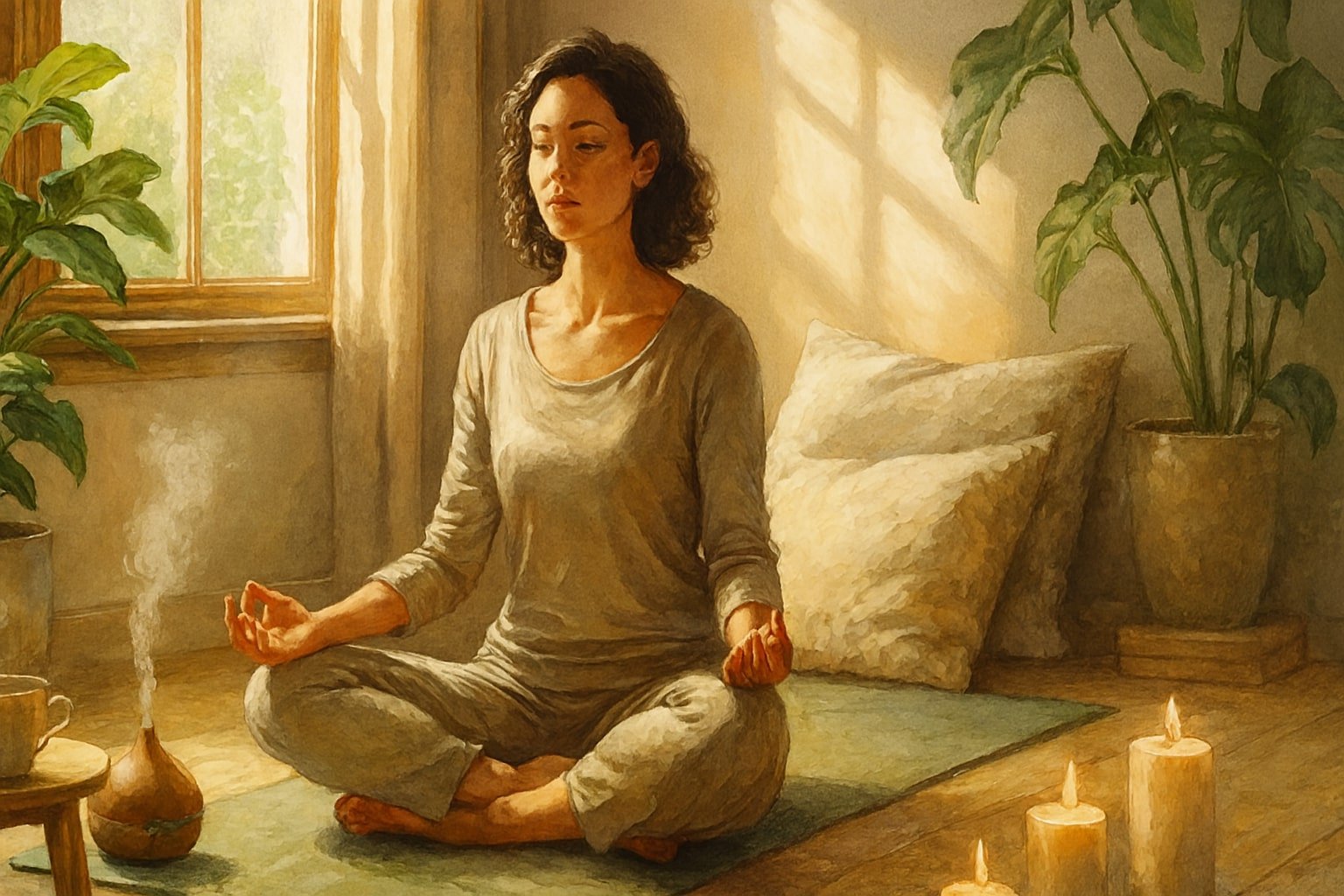
Stress happens to everyone. But too much stress can harm your mind and body. Knowing what are stress relief techniques helps you feel calmer, sleep better, and stay healthy. This guide shows easy ways to manage stress every day.
1. Eat a Healthy Diet
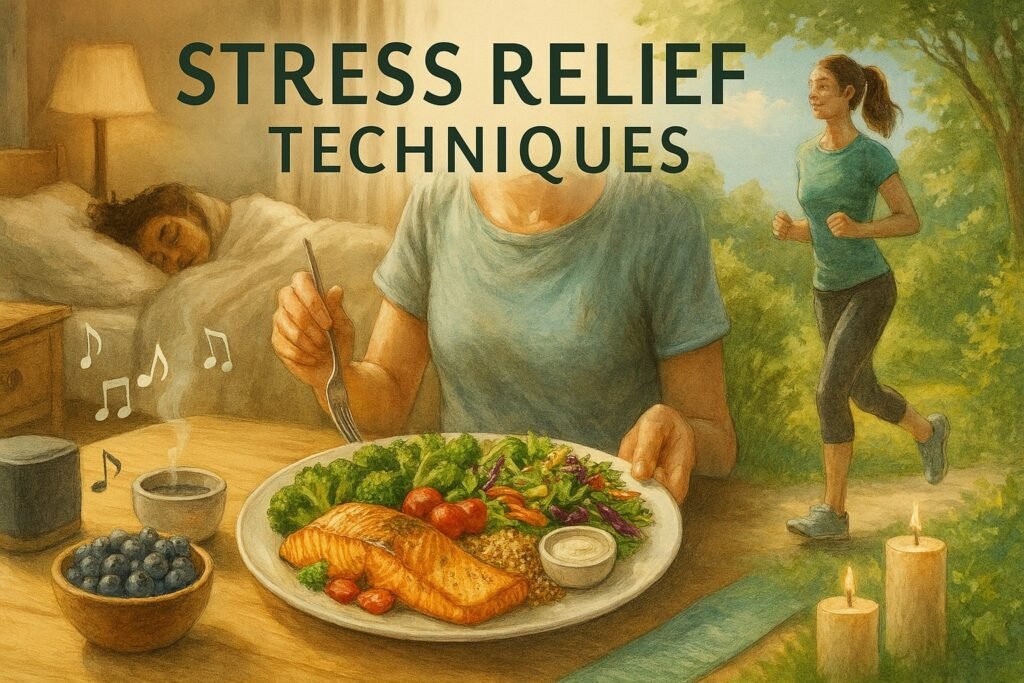
Eating fruits, vegetables, whole grains, and lean proteins can help your body manage stress and keep your mood steady.
In-Depth Analysis:
What you eat affects how you feel. A healthy diet helps your brain work better and keeps your blood sugar steady. This can stop mood swings and irritability. Fish and flaxseeds have omega-3 fats that may lower anxiety. Berries and leafy greens have antioxidants that fight stress and inflammation in the body.
2. Ensure Adequate Sleep
Quick Answer:
Getting good sleep helps your body recover from stress and keeps your emotions steady.
In-Depth Analysis:
Not getting enough sleep can make stress worse. It can make thinking harder and emotions stronger. Keeping a regular sleep schedule, making your bedroom calm, and avoiding screens before bed can help you sleep better. Adults should try to sleep 7–9 hours each night for good health.
3. Engage in Regular Physical Activity
Exercise raises endorphins, which lift your mood, and lowers stress hormones like cortisol
In-Depth Analysis:
Exercise is a strong way to fight stress. Walking, jogging, cycling, and yoga can help clear your mind and calm anxiety. Doing physical activity regularly can improve your health and protect you from stress naturally.
4. Incorporate Music Therapy
Quick Answer:
Listening to music can lower blood pressure, reduce anxiety, and boost your mood.
In-Depth Analysis:
Music affects the brain and helps you relax. Calm music can improve sleep, while lively songs can energize and motivate you. Playing an instrument or singing can also be a fun way to release stress.
5. Practice Meditation and Mindfulness
Meditation and mindfulness help calm your mind, lower stress, and improve focus.
In-Depth Analysis:
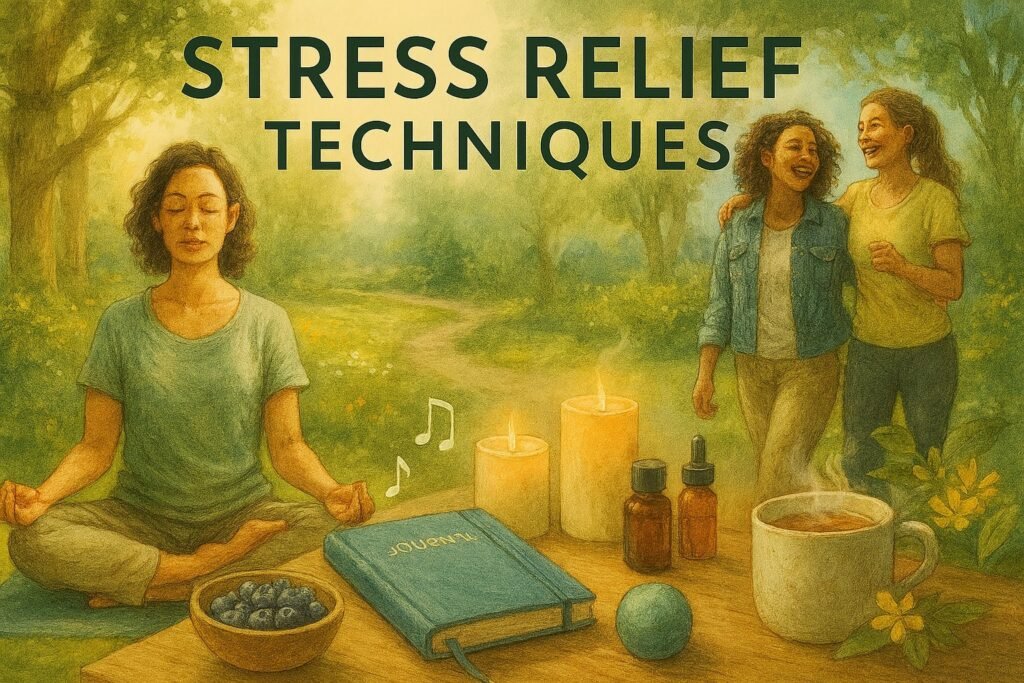
Meditation methods like deep breathing, guided imagery, and muscle relaxation trigger your body’s natural calm response. Mindfulness means noticing the present moment without judgment. Doing these practices every day can reduce stress and help you manage your emotions better.
6. Spend Time in Nature
Being in nature can lower stress hormones and help you relax
In-Depth Analysis:
Spending time outdoors can calm your mind and body. Hiking, gardening, or walking in a park can reduce stress and lift your mood. Nature therapy, also called ecotherapy, can improve your mental well-being and make you more resilient.
7. Foster Social Connections
Spending time with friends and family can give emotional support and reduce stress
In-Depth Analysis:
Good social interactions can protect you from stress. Talking with others, joining community activities, or volunteering can give you a sense of belonging and purpose. Healthy relationships are important for managing stress and staying healthy.
8. Develop a Stress Relief Toolkit
Having your own set of stress-relief methods can help you manage stress better
In-Depth Analysis:
A stress relief toolkit is a mix of techniques that suit you. This can include relaxation exercises, hobbies, self-care time, and getting help from a professional if needed. Using these strategies often can make you stronger and better at handling stress.
Comparison Table: Stress Relief Techniques
| Technique | Benefits | Recommended Frequency |
|---|---|---|
| Healthy Diet | Stabilizes mood, boosts energy | Daily |
| Adequate Sleep | Enhances cognitive function | 7–9 hours per night |
| Physical Activity | Reduces anxiety, improves health | 30 minutes most days |
| Music Therapy | Elevates mood, reduces tension | As needed |
| Meditation & Mindfulness | Improves focus, reduces stress | 10–20 minutes daily |
| Nature Exposure | Lowers cortisol, promotes calm | Weekly |
| Social Connections | Provides support, reduces isolation | Regularly |
| Stress Relief Toolkit | Personalized coping strategies | Ongoing |
Frequently Asked Questions (FAQs)
1. How can I manage stress without medication?
Implementing lifestyle changes such as regular exercise, healthy eating, adequate sleep, and relaxation techniques can effectively manage stress.
2. What are some quick stress relief techniques?
Deep breathing exercises, listening to calming music, and taking short walks can provide immediate stress relief.
3. How does exercise reduce stress?
Exercise increases the production of endorphins, which are natural mood lifters, and helps distract from daily worries Mayo Clinic.
4. Can meditation help with chronic stress?
Yes, regular meditation practice can reduce symptoms of chronic stress by promoting relaxation and improving emotional regulation.
5. Why is socializing important for stress management?
Social interactions provide emotional support, reduce feelings of isolation, and help individuals cope with stress more effectively.
Conclusion
Managing stress is important for staying healthy and feeling good. Using healthy habits, relaxation methods, and time with friends or family can help lower stress. Be consistent and choose strategies that fit you best to improve your life.
Author Bio
Dr. Asadujjaman is a licensed clinical psychologist with over 10 years of experience in stress management and mental health. They have contributed to various publications and provide workshops on coping strategies and emotional resilience.
References
- Mayo Clinic. (2023). Stress relievers: Tips to tame stress. Retrieved from https://ww.mayoclinic.org/healthy-lifestyle/stress-management/in-depth/stress-relievers/art-20047257
- Mayo Clinic. (2023). Exercise and stress: Get moving to manage stress. Retrieved from https://ww.mayoclinic.org/healthy-lifestyle/stress-management/in-depth/exercise-and-stress/art-20044469
- Mayo Clinic. (2023). Relaxation techniques: Try these steps to lower stress. Retrieved from https://ww.mayoclinic.org/healthy-lifestyle/stress-management/in-depth/relaxation-technique/art-20045368
- Mayo Clinic. (2023). Meditation: A simple, fast way to reduce stress. Retrieved from https://ww.mayoclinic.org/tests-procedures/meditation/in-depth/meditation/art-20045858
