

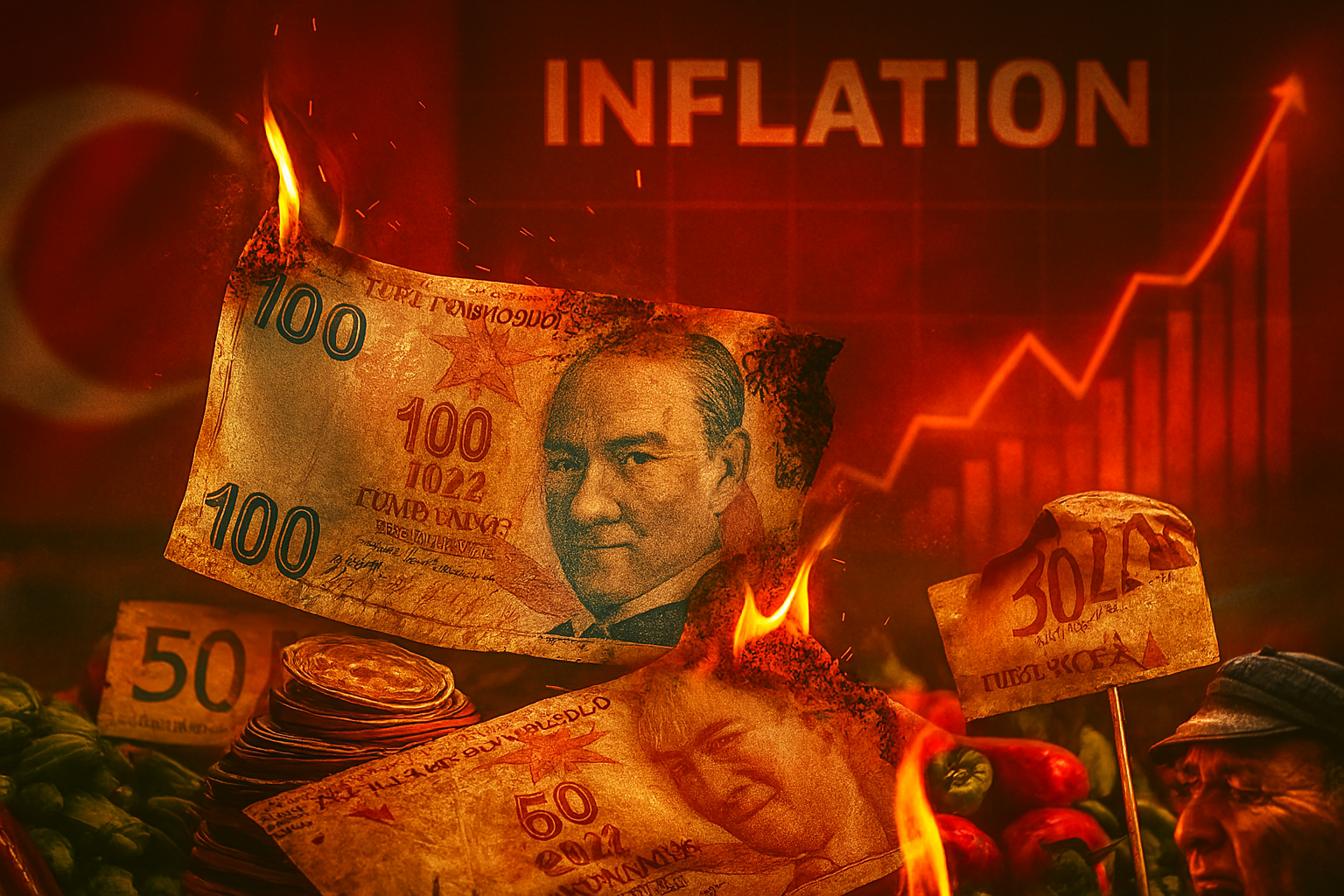
Turkey is facing a big inflation problem in 2025. Prices are rising fast. In September, annual inflation hit 33.3%. Food, housing, and school costs are all going up.
The Turkish Central Bank cut interest rates a lot. Still, the Turkish lira is very weak. People are losing buying power. This makes life harder and hurts the economy.
Citizens like Batikan feel the effects every day. They pay more for basic needs. The whole country feels the strain.
What Is the Turkey Inflation Crisis?
The Turkey inflation crisis means prices are rising fast. This makes the Turkish lira (TRY) lose value. In September 2025, inflation jumped to 33.3%. This was higher than expected. It worries many people, especially after the central bank cut interest rates.
Causes of the Inflation Crisis
1. Unusual Economic Policies
President Erdoğan’s government has tried to boost growth by keeping interest rates low. But this has made the currency weaker and prices higher.
2. Weak Turkish Lira
The lira has dropped to record lows against other currencies. Imports now cost more. This pushes up prices for everything.
3. Global Factors
Rising energy costs and supply chain problems worldwide have also made inflation worse in Turkey.
Impact on Citizens and the Economy
Batikan’s Story: A Young Worker
Batikan is 24 and works in Istanbul. Rising prices and shrinking wages make it hard for him to buy basic things or save money.
Cost of Living
Daily expenses are harder for many people. A McDonald’s meal costs 25% more than last year. Apple products are more expensive too because of import taxes.
Government and Central Bank Responses

Interest Rate Changes
The Turkish Central Bank cut interest rates to help the economy grow. But inflation is still high, so results are mixed.
Currency Swap Deals
Turkey made currency swap agreements with countries like the UAE. This helps keep the lira stable and makes trading easier.
Youth Thinking About Moving Abroad
Many young people want to study or work in countries like Germany and the U.S. They seek better pay and stability.
What Works and What Can Improve
Strengths
- Government Efforts: Interest rate changes and swap deals show action.
- Citizen Resilience: People find smart ways to cope with rising costs.
Areas for Improvement
- Monetary Policy: Better balance in interest rates may control inflation without hurting growth.
- Youth Opportunities: More jobs and business options for young people could reduce migration.
Comparison Table: Inflation and Interest Rates
| Month | Inflation Rate | Interest Rate |
|---|---|---|
| May 2024 | 75.45% | 50% |
| December 2024 | 44.38% | 47.5% |
| September 2025 | 33.3% | 40.5% |
FAQ Section
Q1: What caused the Turkish inflation crisis?
The crisis is attributed to unorthodox monetary policies, currency depreciation, and external economic factors.
Q2: How has inflation affected the Turkish lira?
The lira has reached record lows against major currencies, increasing the cost of imports and contributing to higher inflation.
Q3: What measures is the Turkish government taking to address the crisis?
The government has implemented interest rate cuts and entered into currency swap agreements to stabilize the economy.
Q4: How are young Turks responding to the economic situation?
Many are considering studying or working abroad in countries like Germany and the U.S. for better opportunities.
Q5: What can be done to improve the situation?
A balanced approach to monetary policy and increased support for youth employment can help mitigate the crisis.
Conclusion
Turkey’s inflation crisis in 2025 is a multifaceted issue with deep economic and social implications. While the government has taken steps to address the situation, challenges remain. A more balanced approach to economic policy and increased support for the youth could pave the way for a more stable future.
Boost your online presence with professional SEO, web design, content marketing, and link-building services — all in one place.
Let LinkLuminous help your brand shine brighter, rank higher, and reach the right audience.
Start your digital growth today at LinkLuminous.com
Author Bio
This article is authored by a financial analyst with over 10 years of experience in emerging markets, specializing in macroeconomic trends and policy analysis.
References
- Reuters
- Reuters
