


Mental health journaling prompts are simple questions or statements. They help you think about your feelings, actions, and daily life. Using these prompts can improve self-reflection, lower stress, and make you feel better emotionally. They support your mental health.
Understanding Mental Health Journaling Prompts
Mental health journaling prompts are tools. They help you reflect on your feelings and track your emotions.
Mental health is about taking care of your mind, emotions, and social well-being. Journaling is a simple way to process feelings, notice behaviors, and handle stress. Adding mindfulness and guided exercises can turn journaling into a daily habit that supports overall emotional health.
Key Entities:
- Mental Health: Focus on emotions and overall mental state.
- Journaling: Tool for structured reflection.
- Self-Reflection: Understanding feelings and actions.
- Stress Management: Benefit of journaling.
- Emotional Well-being: Positive outcome of regular journaling.
- Mindfulness: Technique to pair with journaling.
- Therapeutic Exercises: Structured prompts and exercises.
- Daily Routine / Habit Tracking: Helps make journaling consistent.
Personal Experience with Journaling Prompts
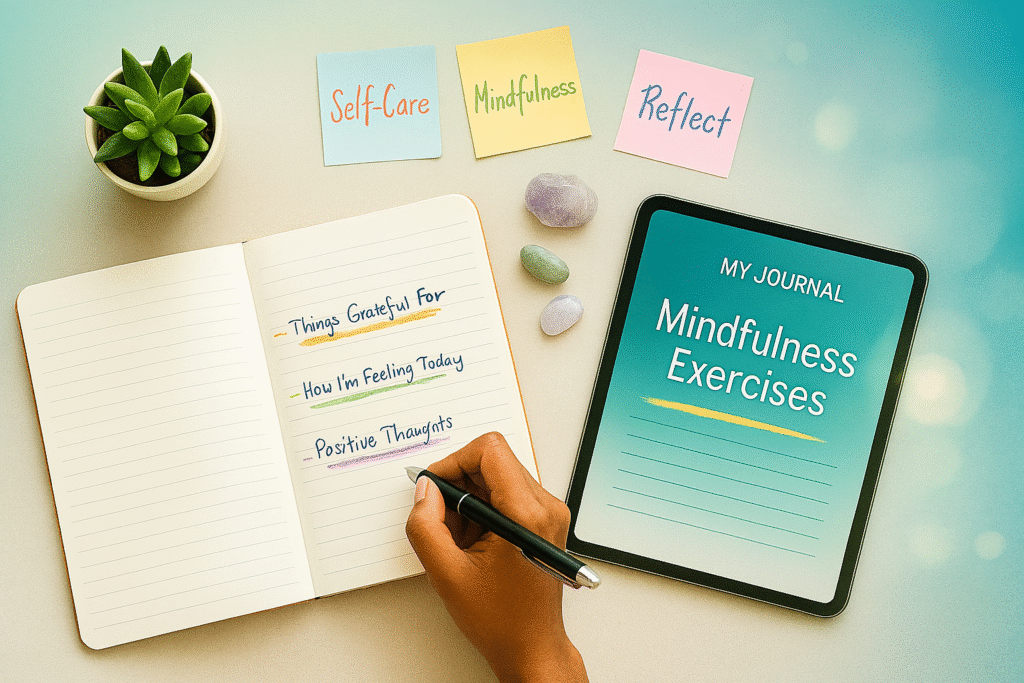
Quick Answer: Real-life journaling shows clear benefits for stress relief and self-awareness.
Scenario 1: Sarah, 28, used journaling to handle workplace stress. She asked, “What moment today caused the most stress, and why?” After three months, she felt less stressed and noticed her triggers more clearly.
Scenario 2: John, a college student, wrote in the evening about school and social pressures. Prompts like “What accomplishment am I proud of today?” improved his mood and sleep.
Tip: Journaling is like a mental exercise. Using a habit tracker or daily log makes it easier to stay consistent and see progress.
What I Like About Mental Health Journaling Prompts
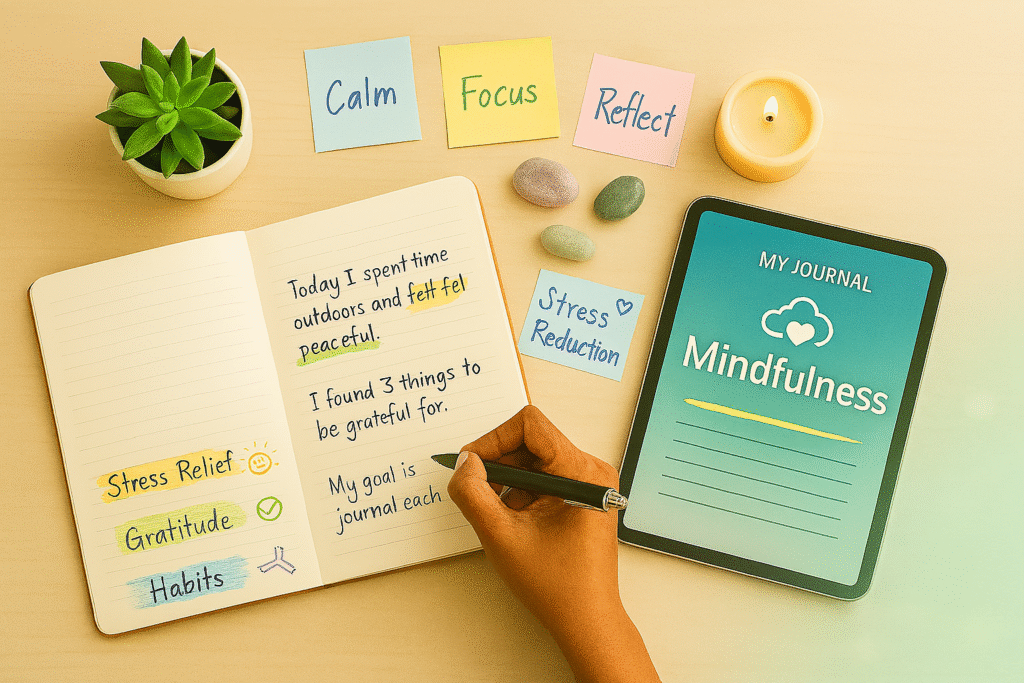
- Structured Reflection: Helps clarify thoughts and emotions.
- Stress Reduction: Supports emotional balance.
- Mindfulness Integration: Works with meditation or breathing exercises.
- Practical Habit Formation: Fits into daily routines.
- Versatile: Can help with anxiety, depression, or general mental health.
Areas for Improvement
- Time Commitment: Daily journaling can take time.
- Over-Reliance: Journaling isn’t a replacement for therapy.
- Quality of Prompts: Generic prompts may not work for everyone.
- Digital Distractions: Online journaling may reduce focus compared to pen and paper.
Comparison Table: Types of Journaling Prompts
| Prompt Type | Purpose | Example | Frequency |
|---|---|---|---|
| Self-Reflection | Understand emotions & behaviors | “What moment today challenged me the most?” | Daily |
| Gratitude | Increase positivity | “List three things I’m grateful for today.” | Daily |
| Stress Management | Reduce stress & anxiety | “What triggered stress, and how did I respond?” | 3–5 times/week |
| Mindfulness | Enhance awareness | “Describe a moment today I was fully present.” | Daily |
| Goal-Oriented | Track personal growth | “What step did I take toward my long-term goal?” | Weekly |
Practical Tips for Implementing Journaling Prompts
- Start Small: Begin with 5–10 minutes daily.
- Use Habit Trackers: Track consistency and progress.
- Combine with Mindfulness: Deep breathing or meditation before writing enhances focus.
- Review Weekly: Reflect on entries to identify patterns.
- Be Honest: Write without judgment for best self-reflection outcomes.
FAQ: Mental Health Journaling Prompts
Q1: What are mental health journaling prompts?
A1: Structured questions or statements that guide self-reflection, emotional awareness, and stress management.
Q2: How often should I use journaling prompts?
A2: Daily practice is ideal, but 3–5 times per week can still provide benefits.
Q3: Can journaling replace therapy?
A3: Journaling supports therapy but is not a replacement for professional mental health treatment.
Q4: What types of prompts are most effective?
A4: Self-reflection, gratitude, stress management, mindfulness, and goal-oriented prompts are highly effective.
Q5: Can I journal digitally?
A5: Yes, apps or online journals work, but pen-and-paper journaling may improve focus and mindfulness.
Q6: How long does it take to see benefits?
A6: Many notice improvements in emotional well-being and stress management within 4–8 weeks of consistent journaling.
Q7: Are there evidence-based benefits?
A7: Studies show journaling can reduce stress, improve mood, and enhance self-awareness (Pennebaker & Smyth, 2016).
Conclusion
Mental health journaling prompts are powerful tools to improve emotional well-being, strengthen self-reflection, and manage stress. By integrating mindfulness and habit tracking, you can create a sustainable practice that benefits daily mental health. Start small, stay consistent, and make journaling a core part of your self-care routine.
Author Bio
Farid Ahmmad is a mental health advocate and content creator with over 5 years of experience in journaling, stress management, and emotional well-being. He combines personal practice with research-backed strategies to provide actionable insights on self-reflection, mindfulness, and mental health improvement.
References
- Pennebaker, J.W., & Smyth, J.M. (2016). Opening Up by Writing It Down: How Expressive Writing Improves Health and Eases Emotional Pain. Guilford Press.
- Reflection App. (2025). Benefits of Journaling for Mental Health. https://www.reflection.app/blog/benefits-of-journaling
- Positive Psychology. (2025). Journaling Prompts for Self-Reflection. https://positivepsychology.com/journaling-prompts
