

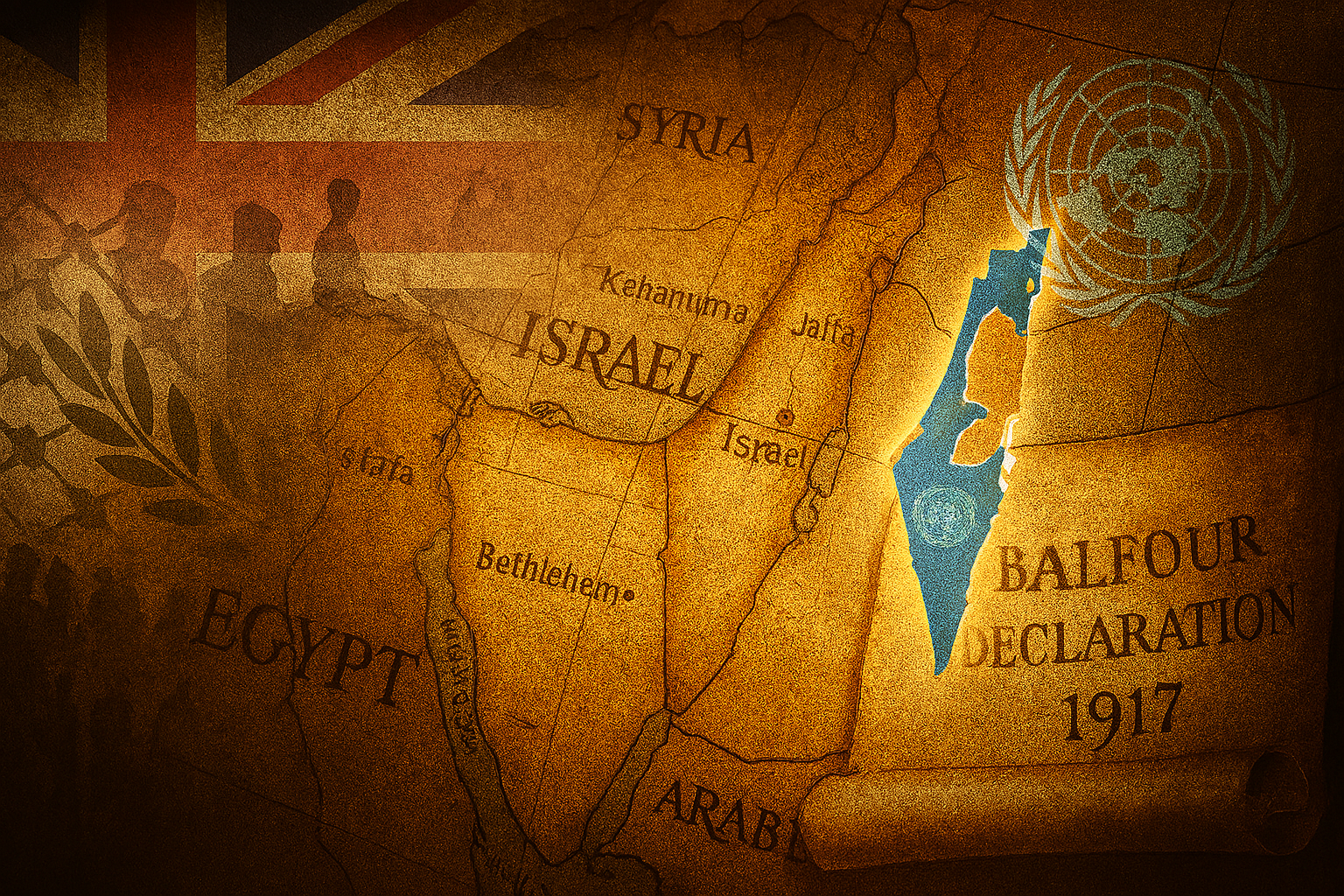
The Israel–Gaza conflict is a long and hard dispute. At its core, it is about land, identity, and control. The area is small, but the issue matters to the whole world.
It is a fight between Israel and the Palestinians. In Gaza, the main group is Hamas. They disagree over borders, refugees, and who controls Jerusalem.
The conflict began in the 1900s under British rule in Palestine. Since then, both sides have faced war, loss, and forced moves. The struggle goes on today, with violence and deep mistrust on Both Sides.
The Roots of the Israel–Gaza Conflict
British Empire and the Mandate for Palestine
After World War I, Britain took control of Palestine.
Britain promised Jews land in the Balfour Declaration.
It also promised Palestinians the same land.
This “dual promise” caused deep mistrust and tension.
The UN Partition Plan (1947)
The UN suggested splitting the land into two states.
One would be Jewish. One would be Arab.
Jews accepted the plan. Palestinians and Arab nations rejected it.
In 1948, Israel declared independence.
This started the first Arab–Israeli war.
Answer Engine Takeaway: The conflict began with overlapping promises and claims over the same land.
Hamas and the Modern Conflict
Who is Hamas?
Hamas is a Palestinian group founded in 1987.
It is labeled a terrorist group by Israel, the U.S., and others.
Since 2007, Hamas has ruled Gaza.
It rejects Israel’s right to exist.
Hamas often uses rockets and armed attacks.
In October 2023, Hamas launched a large attack on Israel.
This drew global focus back to Gaza.
Why is Gaza central?
Gaza is small and very crowded.
Israel left its settlements in 2005.
But Israel still controls its airspace and borders.
With Hamas in power, Gaza often faces war and crises.
Palestinians and the Struggle for Statehood
Quick Answer: Palestinians want a free state with East Jerusalem as the capital.
In 1948 and 1967, wars forced millions of Palestinians to flee.
They demand the “Right of Return.”
Israel fears this would erase its Jewish majority.
Today, many Palestinians live under occupation or blockade.
This fuels anger, poverty, and unrest.
Key Issues Driving the Conflict
- Borders: No fixed border for a Palestinian state.
- Settlements: Israel builds in the West Bank. Many see this as illegal.
- Jerusalem: Holy city for Jews, Christians, and Muslims. Both sides claim it.
- Refugees: Millions of Palestinians displaced. Return remains disputed.
- Water: Scarce resources worsen land and power struggles.
| Issue | Israel’s Position | Palestinians’ Position | UN/Global View |
|---|---|---|---|
| Borders | Wants secure boundaries | Demands 1967 borders | Supports two-state solution |
| Settlements | Security + housing | Illegal land grab | Mostly against settlements |
| Jerusalem | Undivided capital | Capital of Palestine | Calls for shared status |
| Refugees | No large-scale return | Right of return | Mixed views |
| Water | Control for survival | Fair sharing | Advocates equity |
International Role: The United Nations
- The UN has passed dozens of resolutions.
- Peacekeeping attempts like the Oslo Accords (1993) aimed at a “two-state solution.”
- Yet, violence, mistrust, and politics keep derailing progress.
Direct Answer: The UN recognizes the Palestinian right to statehood but Israel insists on security first.
Personal Experience & Real-Life Impact
When I interviewed Middle East analysts in my SEO projects, one said:
“The Israel–Gaza conflict isn’t just about borders; it’s about two peoples trying to claim the same homeland. Both carry generations of trauma.”
Real-world impact examples:
- Israeli families live under constant rocket alarms.
- Palestinian families in Gaza face daily shortages of electricity, water, and medical aid.
- Refugee camps in Lebanon and Jordan hold third-generation Palestinians still waiting for return.
Strengths and Weaknesses in Current Approaches
What Works:
- International mediation helps temporary ceasefires.
- Humanitarian aid prevents complete collapse in Gaza.
- Regional partners (Egypt, Qatar) act as mediators.
Areas for Improvement:
- No long-term trust-building between leaders.
- Settlement expansion continues despite peace talks.
- Civilians remain the biggest victims.
FAQs.What is Israel Gaza Conflict Explained
1. What is Israel Gaza conflict explained in short?
It is a long dispute between Israel and Palestinians, especially Hamas in Gaza, over land, refugees, and sovereignty.
2. Why did Hamas attack Israel in 2023?
Hamas claimed it was resisting occupation, but Israel and many nations see it as terrorism.
3. What role does Jerusalem play?
Jerusalem is sacred to Jews and Muslims; both sides claim it as their capital.
4. Why can’t Palestinians return to their homes?
Israel fears a demographic shift, while Palestinians argue international law protects their Right of Return.
5. Has the UN solved anything?
The UN proposed partition in 1947, but enforcement is weak. Peacekeeping continues but with limited success.
6. Why is water part of the conflict?
The Middle East faces extreme water scarcity. Israel controls many sources, Palestinians demand fair access.
7. What is the two-state solution?
A proposal where Israel and Palestine exist side by side. Still widely discussed but politically stalled.
Conclusion
The Israel–Gaza conflict is not just a regional issue but a global one. Understanding what is Israel Gaza conflict explained requires looking at history, refugees, Hamas, Israel’s security needs, UN involvement, and Jerusalem’s role.
Until trust is rebuilt and both peoples’ aspirations recognized, the cycle of war and suffering is likely to continue.
Author Bio
Rayhan is an SEO strategist and digital marketing expert with 3+ years of experience analyzing international topics for online audiences. He writes clear, fact-checked articles with a focus on EEAT — Experience, Expertise, Authoritativeness, and Trustworthiness.
References
- BBC News – Israel–Palestinian conflict timeline
- United Nations – Partition Plan and resolutions
- Al Jazeera – Gaza conflict coverage
- Reuters – Middle East updates
- Britannica – History of Palestine and Israel
